By Iliana Dimitrova
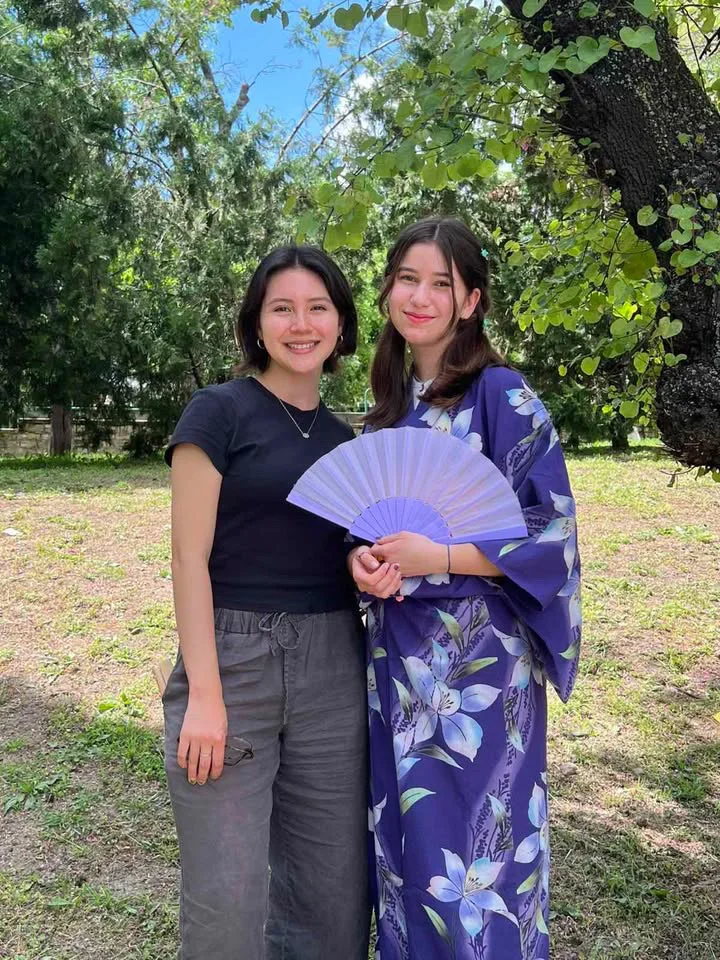
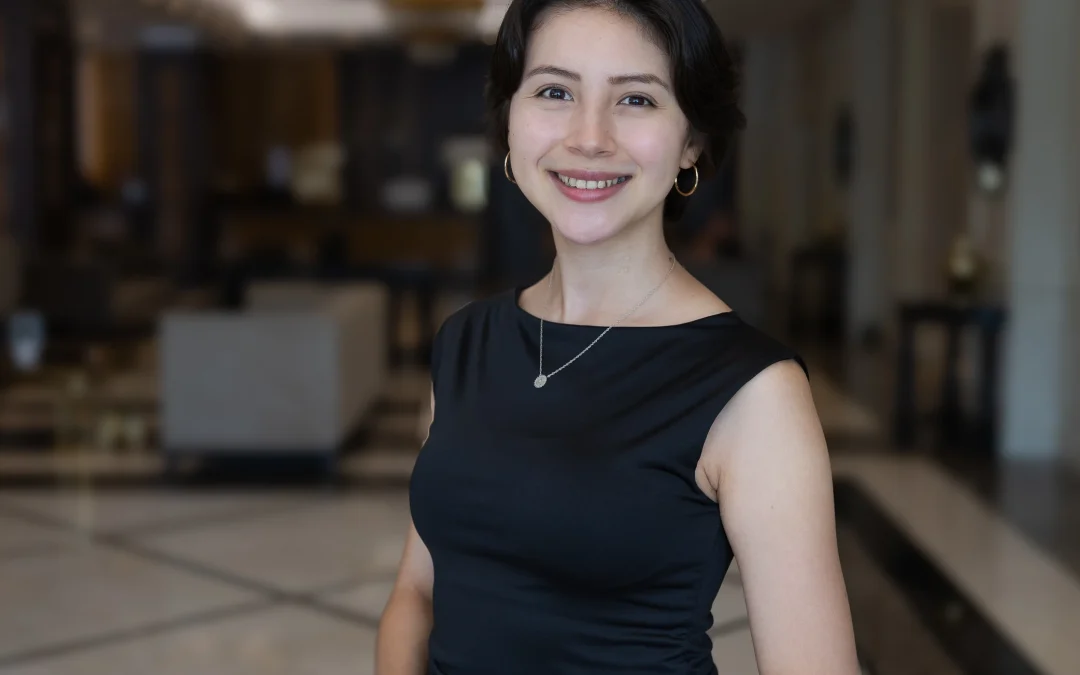
Meet Sarah Schalkoff, an English Teaching Assistant at the Romain Rolland Foreign Language School in Stara Zagora—a Japan-born, Kentucky-raised educator, traveler, and language lover whose story has already crossed more borders than most passports ever do. Growing up bilingual in English and Japanese, Sarah later added Indonesian to the mix, along with a BA in Leadership Studies and English from the University of Richmond and a Master of Philosophy in Japanese Studies from the University of Oxford. Her journey has taken her from teaching English in a Syrian refugee camp in Jordan, to studying in Bali, to researching Japanese literature and mixed-heritage identities at Oxford. Along the way, she has tutored Afghan refugee students, led literacy and history lessons, supported international education initiatives, and built a passion for helping people feel at home across cultures. Now in Bulgaria, Sarah is excited to connect with her local community, share Japanese and Asian American traditions, lead a book club, and support EducationUSA through presentations, consultations, and outreach.
FB: Sarah, you have such rich international experience. What first sparked your curiosity about Bulgaria?
My curiosity about Bulgaria started in Japan, specifically at the breakfast table. Every morning, I ate Meiji Bulgaria Yogurt—a breakfast staple in Japan. The yogurt container often listed short, fun facts about Bulgaria, like having a capital city named ‘wisdom’ or Sofia. Then in college, my broad curiosity about Bulgaria grew into a deep interest through a friend who completed a high school exchange year in Sofia. While working together as literacy tutors in Minnesota, he taught me how to make Bulgarian dishes like banitsa while sharing stories about his experience in Bulgaria. So, for me, Bulgarian cuisine played a large role in my decision to apply for Fulbright Bulgaria!
FB: You grew up in Japan, later moved to Kentucky, studied in Jordan and Indonesia, and then continued your education at Oxford. How have these different cultures shaped the way you see the world?
Growing up in the intersection of cultures—between my American father and Japanese mother, in Japan and in the US—is something that I greatly appreciate now. However, it was also something that used to make me feel like I was living between worlds. I constantly needed to navigate between contesting values, like the Japanese virtue of reservation and the American need to voice opinions, and to find the best way to explain my perspectives to those around me. At the same time, I became an expert in both cultures because I was often the first American or Japanese person my peers met and naturally became a bridge for them to one of my two cultures.
As a result, navigating between two cultures became almost second nature for me, but also something that I continued to be fascinated by. My decision to study abroad in Indonesia, a culturally diverse country with over 700 spoken languages, and my dissertational research at Oxford about mixed heritage identities were both built on my deep curiosity about how cultural backgrounds impact the way people see each other.
Today, all of these experiences have contributed to my continuous love of being in spaces of international education and cultural exchange, both as a learner and a professional.


FB: If you could take just one thing from each place you have lived, what would it be?
From Japan, the skill of being perceptive: as a culture where many things are implied, rather than verbally expressed, I learned to be perceptive from a young age. This skill has been helpful when I enter a new culture or community, particularly when I don’t speak the language yet!
From the US, the confidence to voice my opinions. Contrary to my youth in Japan, attending high school and university in the US strengthened my ability to explain my own ideas.
From Jordan, hospitality—-the willingness to invite strangers into one’s home and celebrate together. In Indonesia, where there are more than 700 spoken languages, I realized that switching between multiple languages in one conversation can be normal. Through graduate studies in the UK, I learned the importance of critically examining lived experience to understand how it interconnects with larger societal issues.
And from Bulgaria—the importance of seeking answers, a skill I learned from my students who aren’t afraid to ask the hard questions. Whether it’s about cultural differences, history, or a favorite book, each conversation makes me a stronger educator!
FB: After almost a year in Bulgaria, what are some of the most meaningful things you have learned from your students?
Becoming the teacher with whom students want to share their passions has been one of the most rewarding parts of being an ETA in Bulgaria. Whether it’s as the first person to read their short stories and poems or as the coach of the school’s speech and debate team, I see students who have a truly wide range of interests and talents. Furthermore, and perhaps most importantly, I have learned that actively engaging with their passions is the best way to build one-on-one relationships with my students.
Another thing that I continue to be amazed by is how welcoming students are when it comes to sharing, and helping me learn about, Bulgarian culture (both local and national traditions!). For example, after I taught my very first class at Romain Rolland, a group of 10th graders immediately asked if I wanted to join them for lunch at Sanvichakaa (a famous local sandwich shop)—there, I learned that I too was participating in a classic Stara Zagora tradition, eating a specialty sandwich with one’s classmates between lessons. My students were also the ones who introduced me to the weekly horo sessions. Despite already having multiple practices a week and being advanced dancers, they would join me in the beginner’s level session to translate for me. Ultimately, when students say “you should join us!” they actually mean it and follow-up with it: this is a quality that I admire, and one that I am learning to replicate myself as I share my knowledge and love for American and Japanese cultures.


FB: Literature is a big part of your academic life, and at Oxford, your research focused on Japanese literature and mixed-heritage identity. Who are some of your favorite contemporary Asian writers, and why?
Tough question! When moving to Bulgaria, I brought books by three authors: Matsuda Aoko, Yoshimoto Banana, and Wen Yuju. They are my favorite writers right now.
One of my all time favorite books is Matsuda’s Where the Wild Ladies Are. In this book, Matsuda performs a women-centered retelling of Japanese folk tales. Her novels reveal issues in contemporary Japanese society subtly, and at times vividly, thus making her works entertaining as a reader and deeply intriguing as a person who studies literature. Many of Matsuda’s works have marvelous English translations by Polly Barton, which is also a reason why I really enjoy Matsuda’s novels—I get to experience the stories again in English after reading them in their original Japanese.
Yoshimoto Banana’s novels are those that I find myself reaching back to again and again throughout my life. Whenever I find myself alone on a quiet night, Yoshimoto’s novels, like Kitchen and TUGUMI, allow me to experience a wide range of emotions, from joy to grief, through the characters in a slow and careful manner. Reading her novels makes me feel connected to my childhood days in Japan and helps me navigate adulthood (a little bit) far away from the people I love.
Finally, Wen Yuju is a very exciting contemporary writer in the world of Japanese language literature and Taiwanese literature! Wen writes her novels in a mixture of Japanese, Taiwanese, and Mandarin, and in doing so creates a space where people like me—those who grew up in homes where multiple languages existed together—can see ourselves in the stories and characters. Yet, the beauty of Wen’s works is that readers do not have to come from specific cultural/linguistic backgrounds to truly enjoy her novels due to Wen’s unique way of telling stories!
FB: You lead a book club with your students. What can a book club do that a regular classroom sometimes cannot?
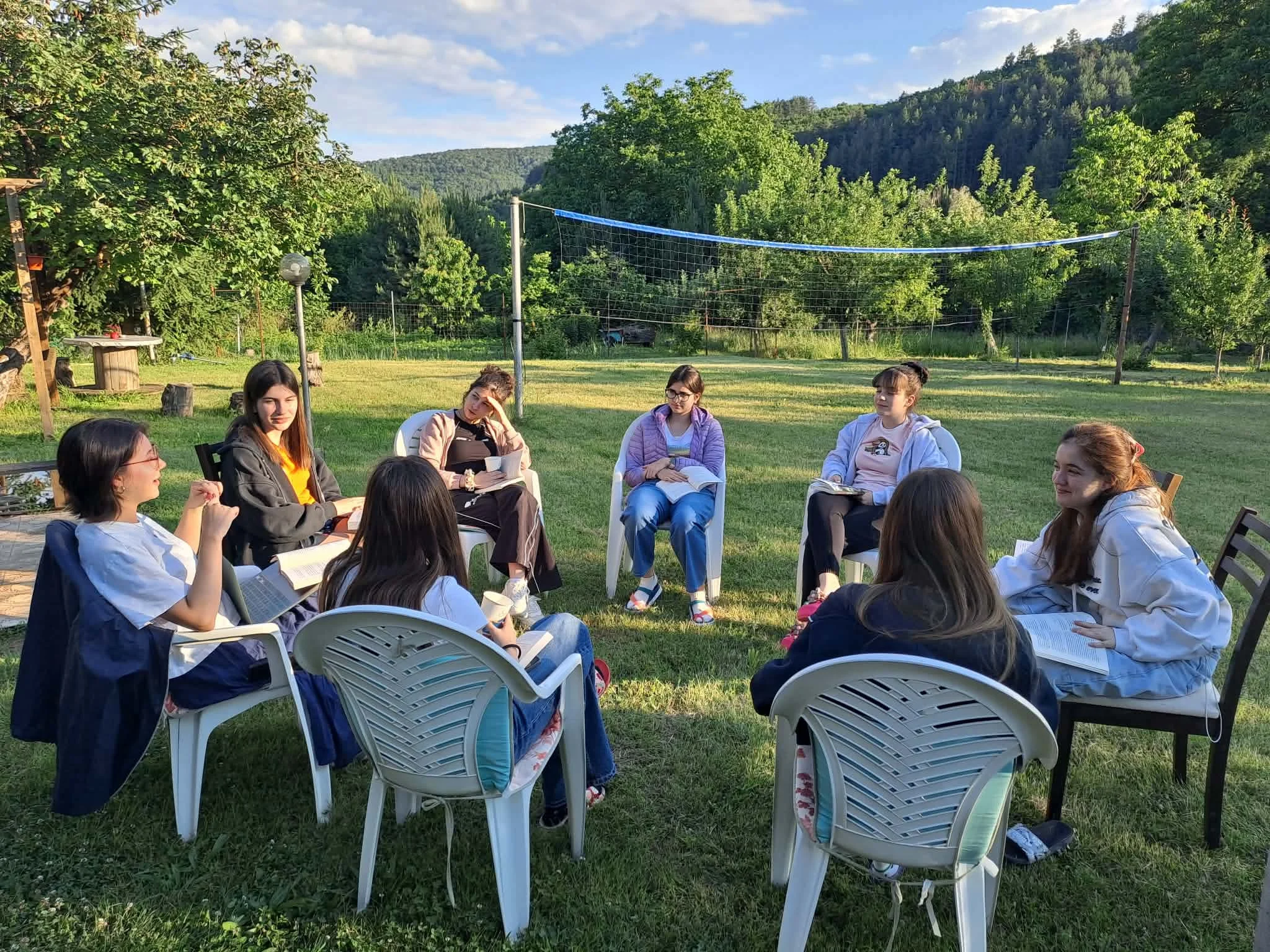
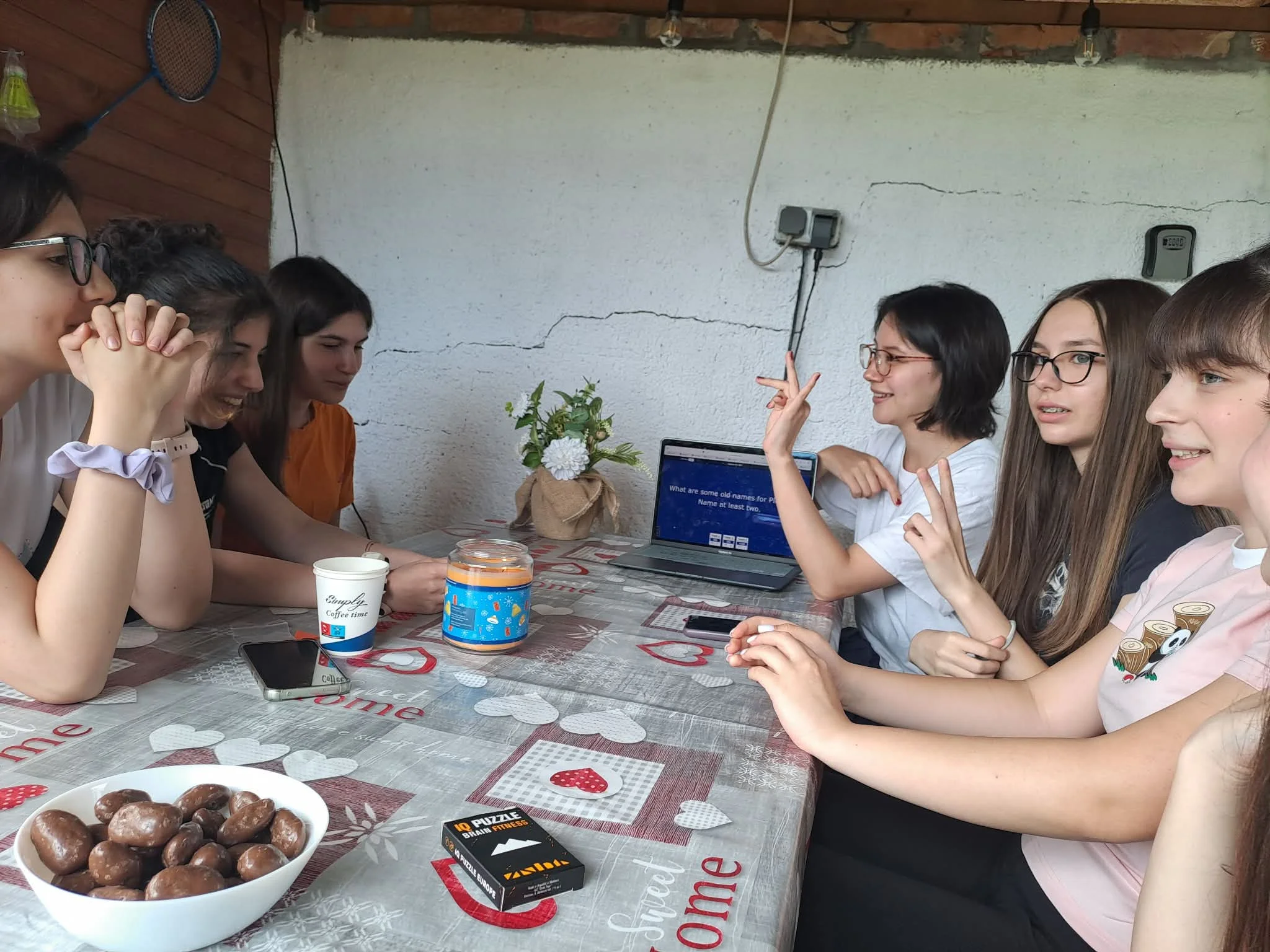
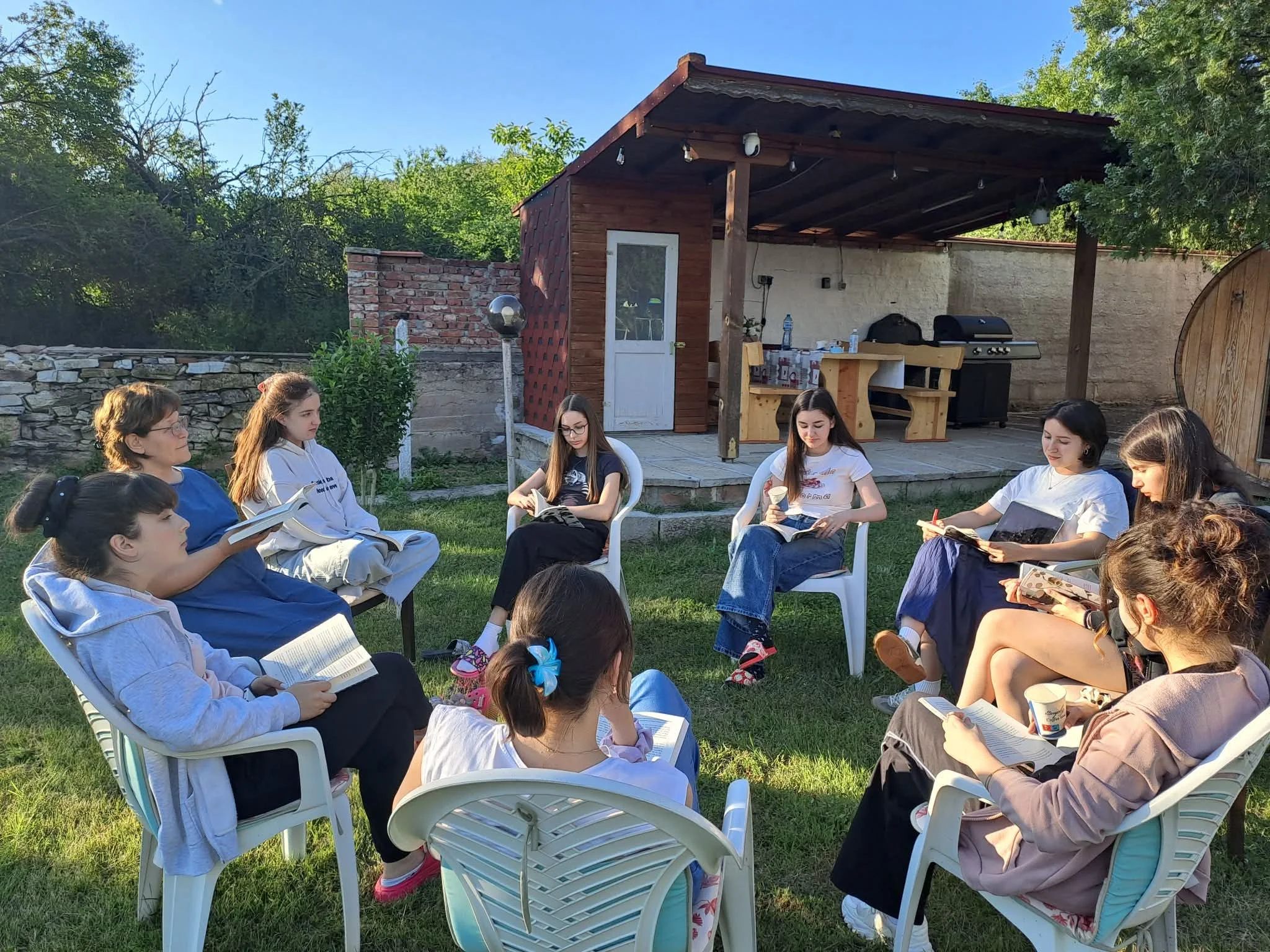
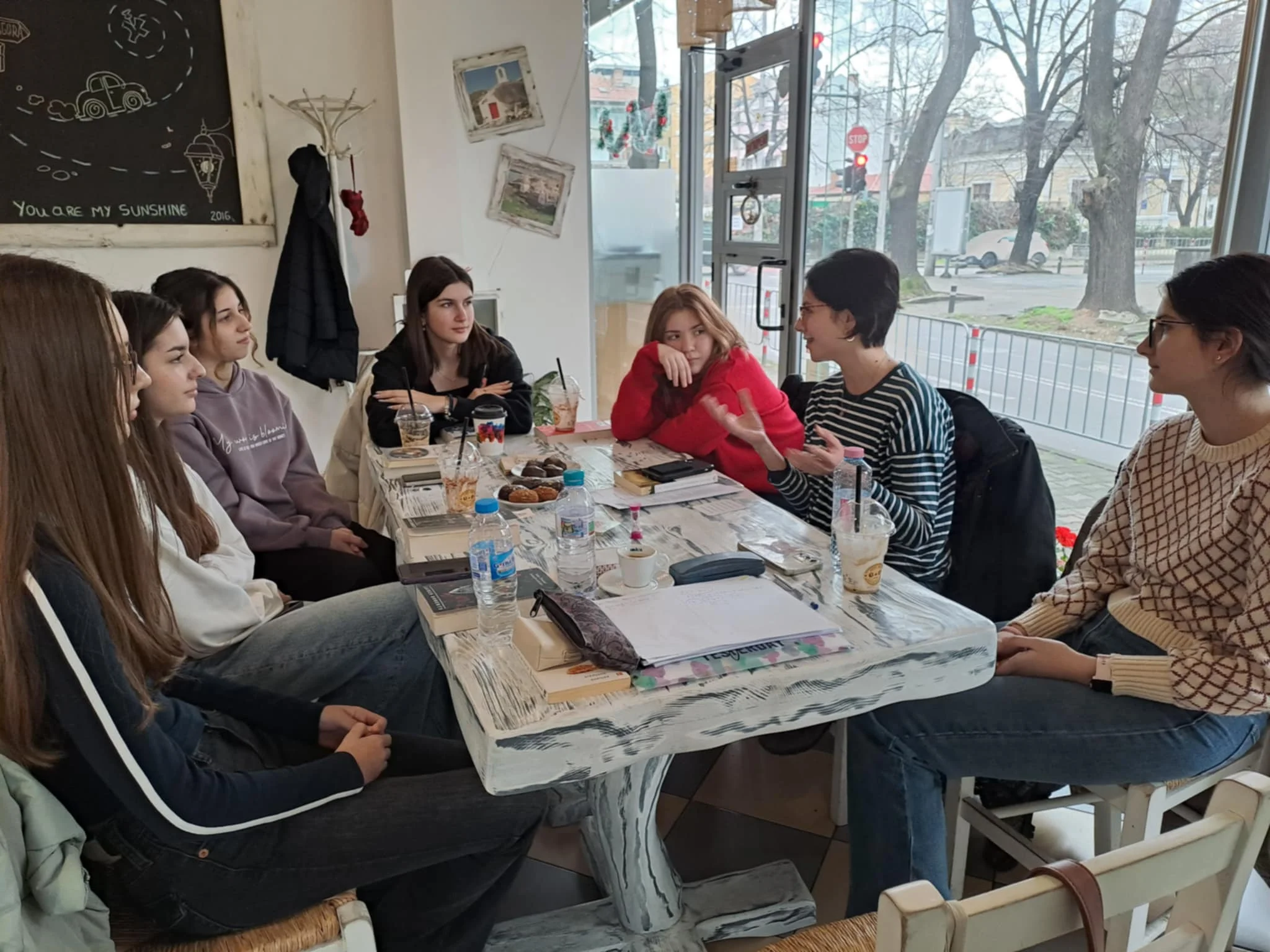
Discussing short stories and novels at book clubs allows students to personalize their reading experience. For example, because of the club’s smaller size (there are six students who meet regularly), students feel comfortable discussing how a passage or a character relates to their own personal experiences, even stories that may be set in a different cultural context. One of my focuses in book club is to help students not only interpret texts but also vocalize how a novel or story made them feel and their opinions about the pieces. I believe creating a book club as a separate space from literature lessons in class has helped students focus on their own reading experience, rather than trying to follow what answers we teachers are looking for!
FB: How has life in Stara Zagora surprised you so far?
The biggest surprise about Stara Zagora is how much there is to do in this city! After ten months, I can confidently say that there are still many places that are still on my bucket list for next year. Stara Zagora is a great combination of a city small enough where I see familiar faces every time I leave my apartment and big enough that there are new parts of the city to explore every other weekend. The city also has a vibrant art scene, from the Stara Zagora Opera to free film festivals.
Another wonderful thing about my placement is how well-connected Stara Zagora is to other regions of Bulgaria due to its central location. For example, I can reach the seaside, Sofia, or Plovdiv in anywhere from two to four hours. As a result, I have been exploring many cities in Bulgaria, such as Shipka, Smolyan, and Haskovo!
FB: In addition to leading extracurricular clubs with students and coaching a BEST English speech and debate team, you have also actively supported EducationUSA activities this year as an intern. How has this enriched your Fulbright experience?
Helping students apply to American universities and exchange programs through my internship with EducationUSA has been the most impactful work I have done outside the classroom. Through this internship, I get to work closely with high school students from across Bulgaria. For example, I have organized monthly online seminars with admissions counselors from US liberal arts colleges to discuss each institution’s unique programs as well as alumni sessions (with current ETAs!) so students can hear more about what a college or university experience in the US actually looks like.
My favorite part of the internship has been helping students effectively convey their stories and goals through their personal statements. In our one-on-one sessions, the student and I comb through their life experiences together to brainstorm for essay topics, which often includes deeply personal conversations. I have found myself really enjoying assisting students transform their life stories into words in the form of essay responses. These experiences have strengthened my desire to continue pursuing a career in international education, while also allowing me to develop my professional skills that will directly benefit me in the field.
Throughout my life, I have been able to experience incredible educational opportunities and cultural experiences thanks to fellowship and scholarship programs like the US Department of State’s Critical Language Scholarships, the Jepson Scholars program, and, of course, the Fulbright program. Through my internship with EducationUSA, I wish to continue to support and increase more Bulgarian students’ access to education opportunities in the US.
FB: You are one of the ETAs staying in Bulgaria for one more year. What are you most looking forward to?
I am most excited to further the relationships I have built with my students this year, both in the classroom and through community engagement activities. As I teach around 400 students weekly, it has not been easy to get to know everyone in ten months. So, based on what I have learned about each class and their interests, passions, and English levels, I hope to expand the English lessons I teach to include more realistic and engaging topics, like friendships in coming-of-age stories and how to write a personal statement!