

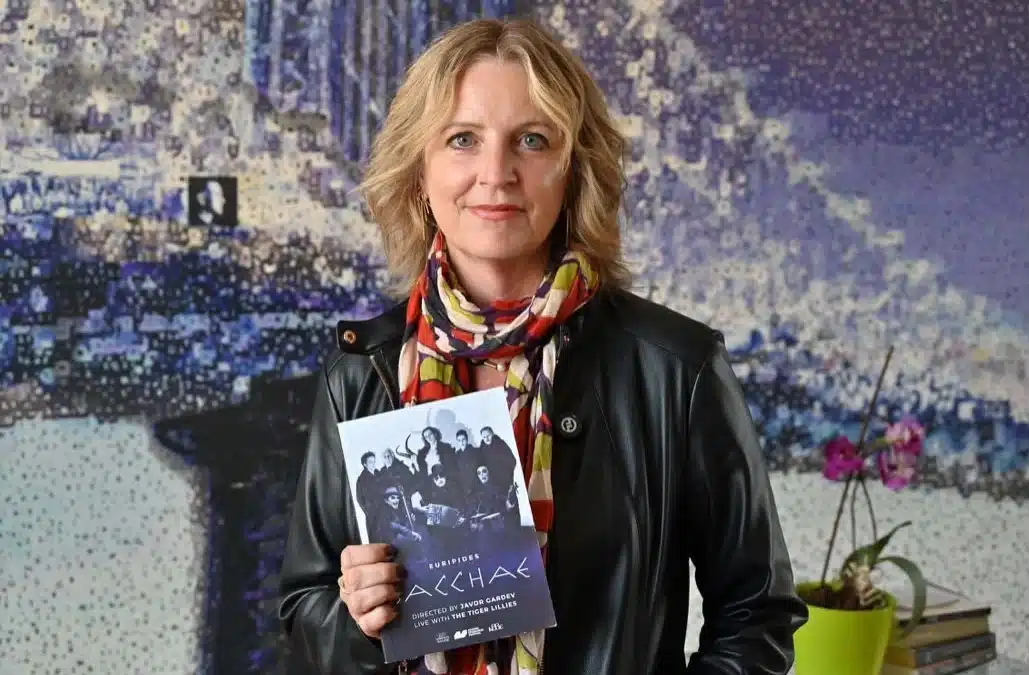
Interview by Rada Kaneva
Sometimes the most interesting Fulbright stories begin with a meeting that nobody realizes is important at the time. The collaboration between American theater scholar Valleri Robinson and acclaimed Bulgarian director Javor Gardev began when Gardev’s own Fulbright experience brought him to the United States. Years later, the exchange came full circle: Robinson arrived in Bulgaria as a Fulbright Scholar at New Bulgarian University to research three decades of Gardev’s work. That research is developing into a book, Directing in Context: The Transformative Theatre of Javor Gardev, 1994–2026.
But somewhere along the way, the scholar studying the director became the director’s collaborator. Robinson and Gardev lectured together at New Bulgarian University, and she joined the creative process of Bacchae as consultant to the director—following the project all the way to the Ancient Theatre of Epidaurus.
We caught up with Valleri to talk about first encounters, Bulgarian theater, the peculiar experience of collaborating with the subject of your own book, and how a Fulbright connection eventually landed her in the middle of a Dionysian adventure at Epidaurus.
Let’s rewind to the beginning. You first met Javor because his Fulbright brought him to the United States. What do you remember about that first encounter? Was there an immediate spark of intellectual curiosity—or did you have absolutely no idea that this person was about to occupy a rather substantial portion of your professional life?
We had a mutual friend, the Belarusian playwright Andrei Kureichik, whom I had invited to my campus at the University of Illinois Urbana-Champaign for some collaborations. We invited Javor, who had directed a powerful film version of Andrei’s play, Insulted. Belarus, to join us for a public talk about the play. Later, I gave our guests a tour of our library archive, where Javor was especially interested in our First Folio of Shakespeare (1623), and he (modestly) told me a little about his productions of Hamlet, Bastard (based on King John), King Lear, and The Tempest. He later shared some video of these stunning productions with me. I knew I had to learn more…
So clearly at some point, “Javor is an interesting director” became “I am going to spend several years writing a book about Javor.” What happened in between? Was there a particular production, conversation, or idea that made you think: “There’s a book here”?
Following our initial meeting, Javor suggested I come to the Varna International Summer Theater Festival, which I attended in 2023; I also decided to see nine of Javor’s productions still playing in the repertoire of several theatres, mostly in Sofia. While in Varna, the editor of Critical Stages, Savas Patsalidis, invited me to write a review essay on these productions, so I almost immediately began writing about Javor’s wide-ranging body of work. Something that struck me was how many young people I saw in the packed theatres. There seemed to be an enthusiastic and rich theatre culture there.
It was probably his production of Edward Albee’s The Goat, or Who is Sylvia? (which I saw by the skin of my teeth thanks to the actor Martin Dimitrov who let me in after I misread the start time on the ticket!) that cemented my interest in Gardev. I was stunned after that jarring, beautifully tragic play. I returned for a quick trip to see his The Merchant of Venice in 2024, which I wrote about in Theater Journal, and we did an extended interview for Contemporary Theater Review (2025).
I began looking at the full range of his career when I was invited to write an entry on Gardev for The Cambridge Encyclopedia of Stage Directors, ed. by Simon Williams and Maria Delgado (2026). Javor Gardev is not easy to pin down to a short encyclopedia entry. Over the last 30 years, Gardev has created an extensive and variable body of work ranging from intimate, ritualistic chamber theatre; mass-scaled, high-tech multimedia performances; vigorous and dynamic Shakespearean adaptations; propulsive contemporary dramas; award winning radio plays; video provocations; and films. He’s certainly tapped into a “monster of energy” and creative force. Someone ought to record that. Why not me?
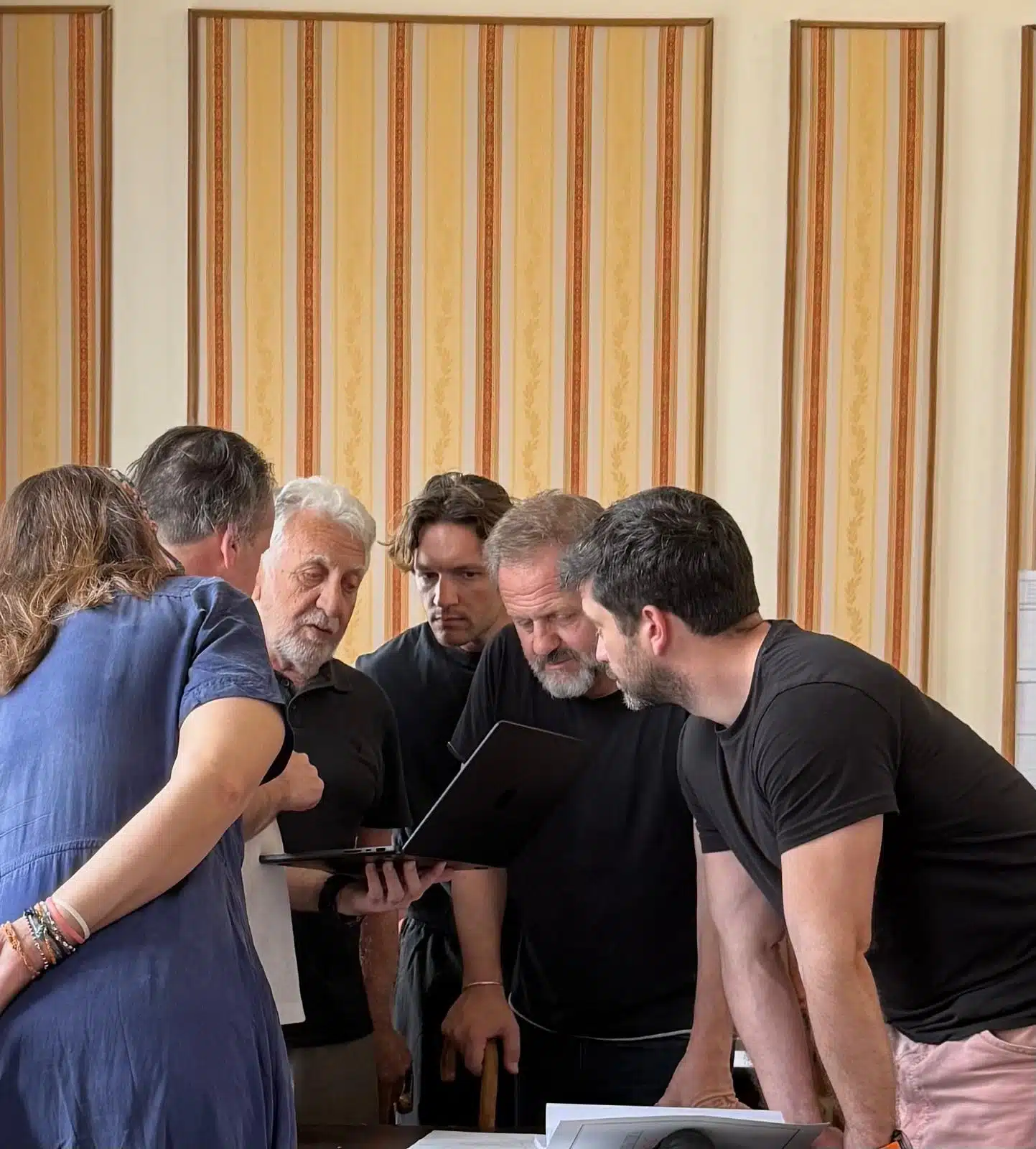
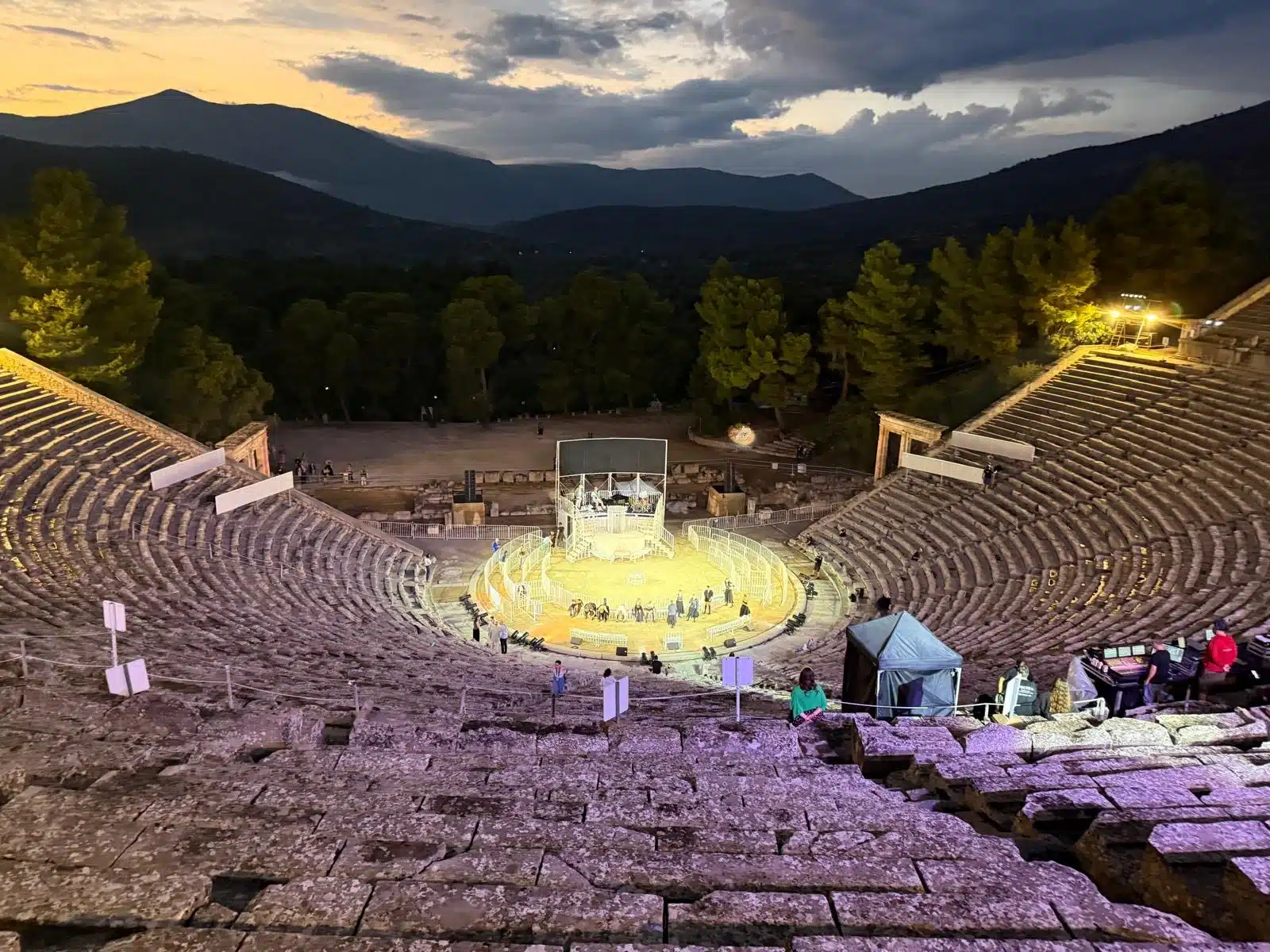
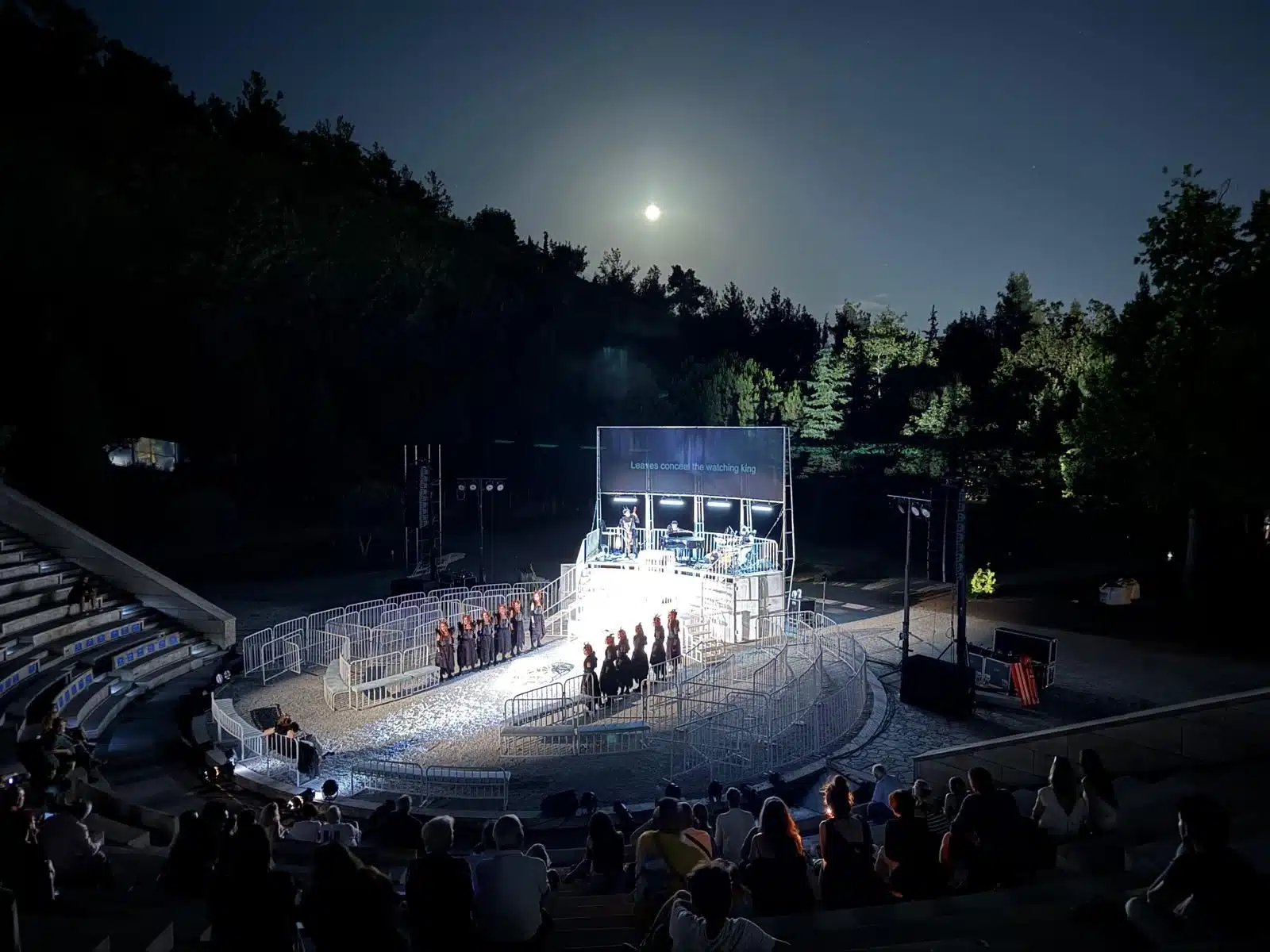
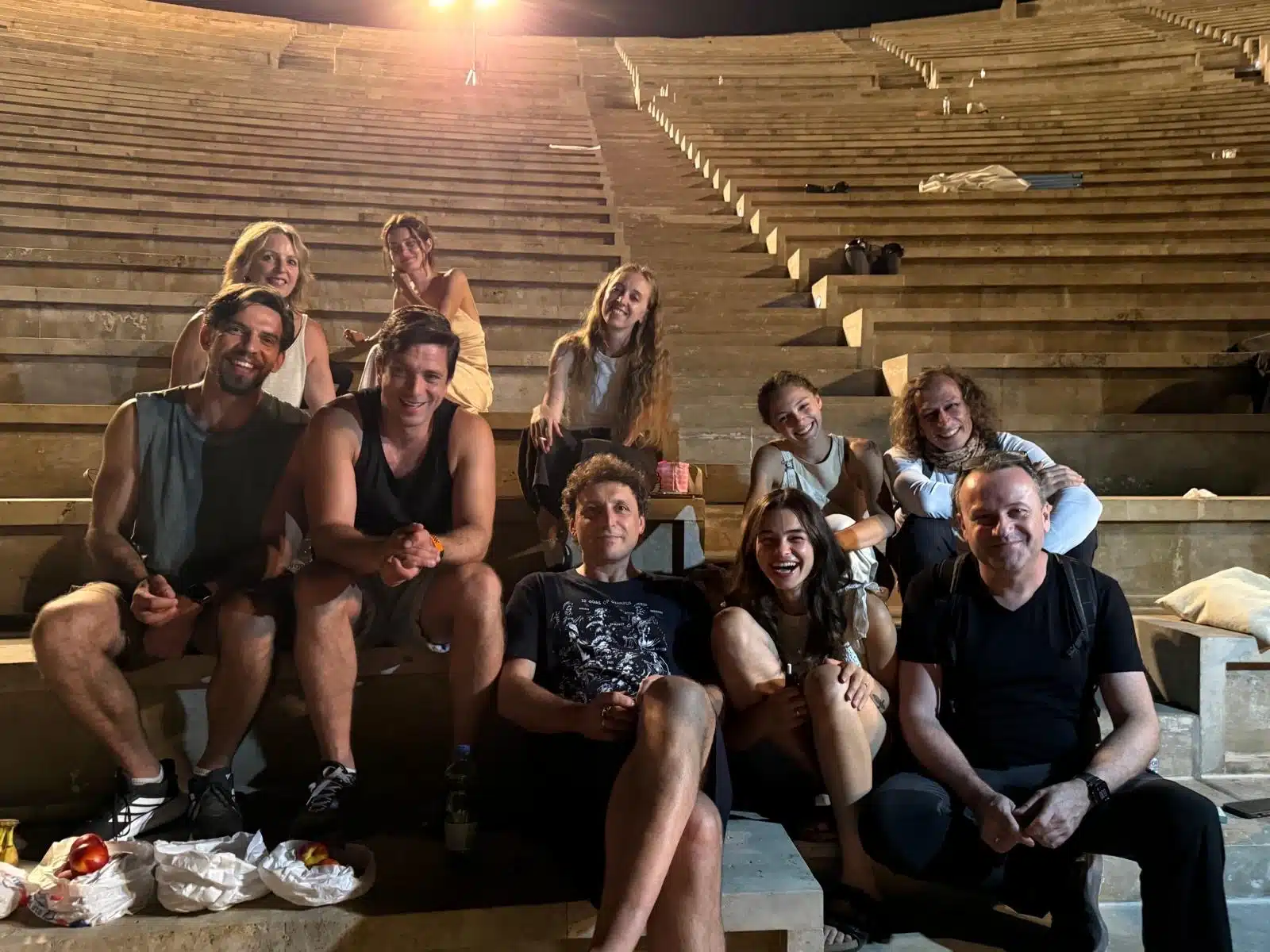
Photo credit: Valleri Robinson
Fulbright brought things full-circle: Javor’s grant had brought him into your world, and then yours brought you into his. Once you were living and working in Bulgaria, what did you begin to understand about Javor’s theater that you simply couldn’t have understood from recordings, archives, or conversations in the United States?
Firstly, I knew I needed to spend more time immersed in Bulgarian language, spaces, and broader theatrical culture in order to have a deeper grip and understanding of Javor’s work. Teaching at New Bulgarian University gave me the opportunity to learn about a range of theatrical training, and my students made suggestions for productions I should see. Their perspectives were enlightening. I also got to know many of Javor’s collaborators with special insight into his work over the past thirty years. The best, for me, was meeting people who first encountered Javor’s work as teenagers and continued to follow his productions for decades. They beam when they remember their initial enchantment and the vibratory energy they experienced. People become really alive when they talk about his work.
The opportunity to participate in rehearsals for Bacchae was the most enriching part of the experience. Watching his methods in action over time goes beyond what any interview could ever reveal. I’m writing about this for the book’s last chapter.
You arrived in Bulgaria as a scholar studying Javor. Then you became his collaborator. Was there a particular moment when you realized you had crossed from observing the creative process into being part of it? And did the researcher in you ever want to interrupt rehearsal with: “That was fascinating—could everyone please do it again while I take notes?”
Ha, ha. Love that. In a way, he’s become a collaborator in my thinking since we met in Illinois, regardless of the project. As you know, not only is he a creative artist, but he’s also a scholar/writer with a brilliant theoretical and unique mind. When it turned out that he would be doing his adaptation of Bacchae in English for the Athens Festival of Epidaurus, our conversations turned into collaboration, and I got to participate as consultant to the director. It does shift my perspective for the last chapter of the book, “Bacchic Provocations: A case study of the process of Bacchae (2026).” I think it was only in an early rehearsal, following an actor’s question, “Why this play now?” that I wanted to ask Javor to slow down, so my hand could keep up… (but I got the best bits).
After studying a director’s work so closely, you might imagine you know how he thinks. Then you enter his rehearsal room. What surprised you most about watching Javor actually direct? Did you ever have one of those slightly alarming scholarly moments of thinking, “Well, there goes that chapter”?
Actually, no. It helped cement some of my hunches based on our previous interviews and conversations. For this process, he was less theoretical in his explanations than I expected he might be in the rehearsal room, but if you know some of the “code,” you could see it there. There was a lot of freedom for improvisational creativity and play within some conditional or necessary parameters. Music and rhythm were guiding features. The layering in of the many material aspects of performance, including the costumes, set, mics, lighting and the physical performance space continually brought new inspiration and dynamism.
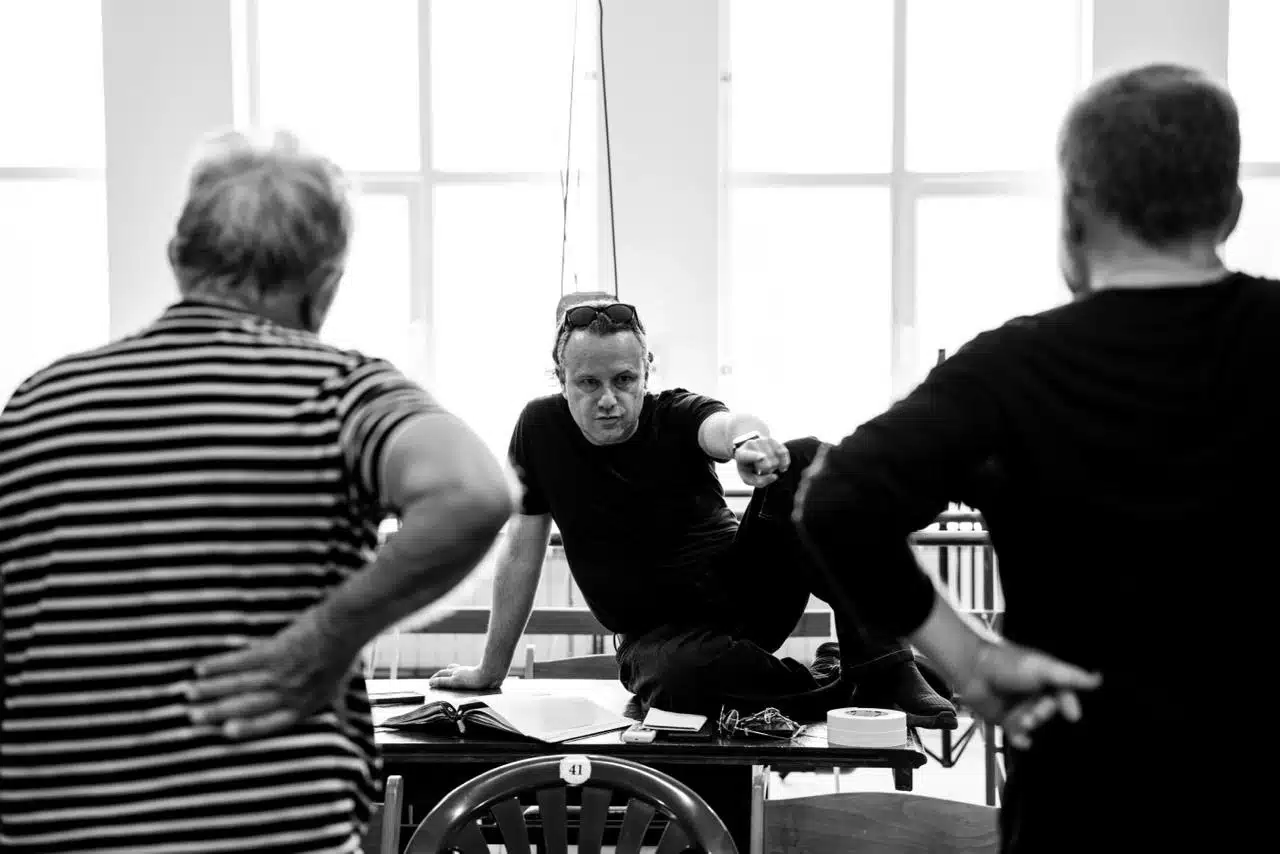
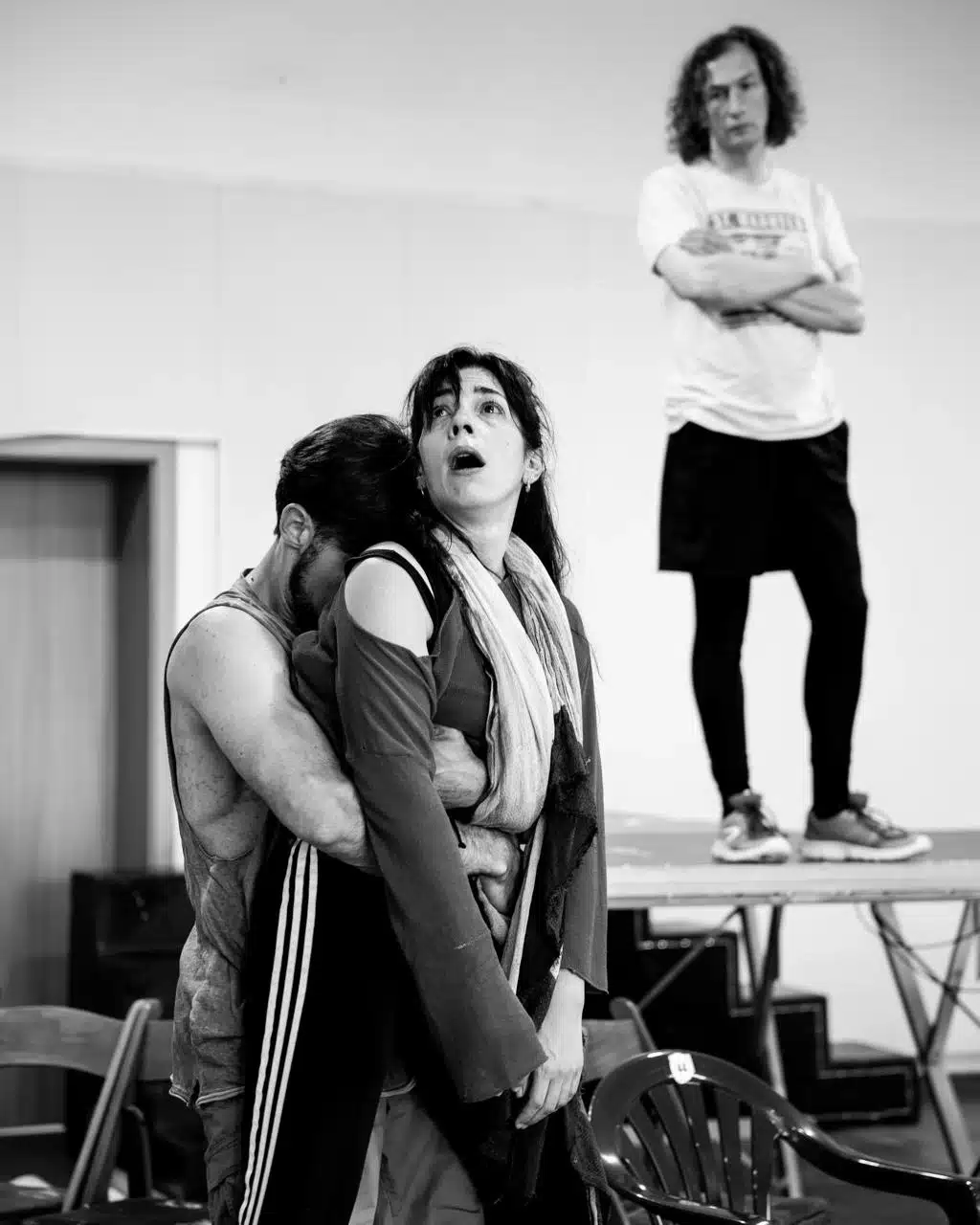
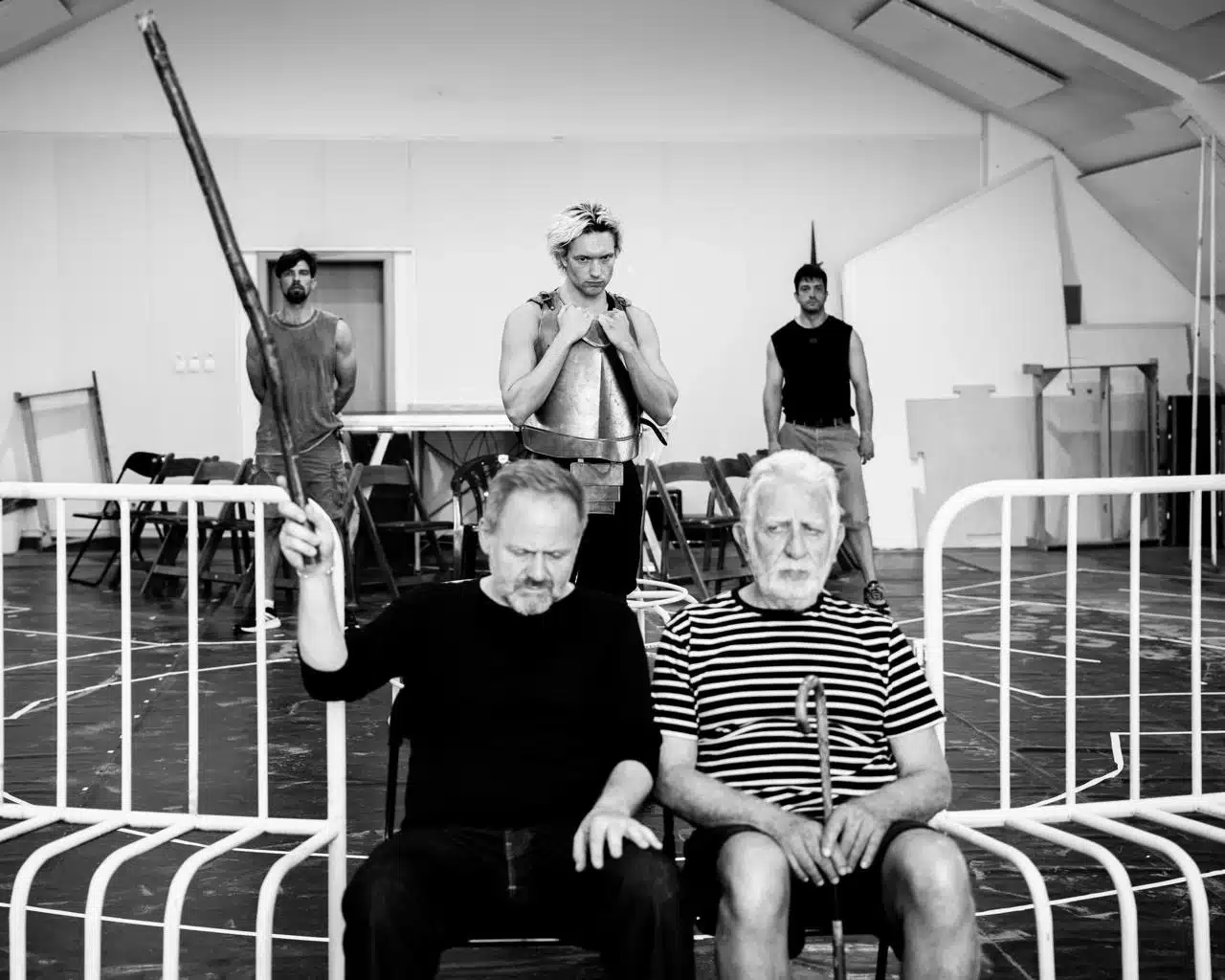
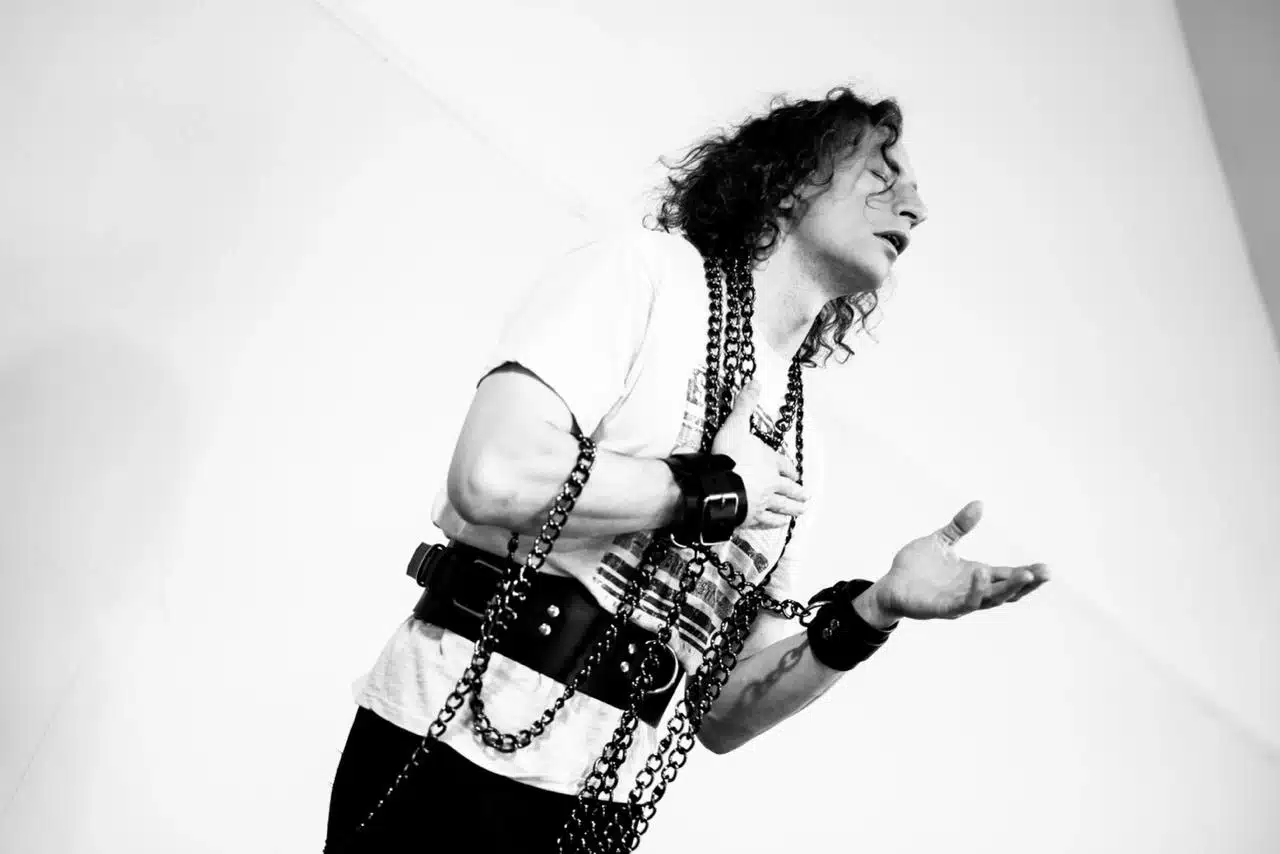
Photo credit: Renegade Media
While researching Javor’s work in Bulgaria, you unexpectedly found yourself part of a remarkable international collaboration. The Bacchae brought together Bulgarian and Greek artists, The Tiger Lillies, and ultimately took you to the Ancient Theatre of Epidaurus, where the production met with extraordinary success. Was there a moment when you looked around and thought, “How exactly did a Fulbright research project get me here?”
Yes, absolutely. I stood at the entrance to the Ancient Theatre of Epidaurus and just couldn’t enter right away. I had last seen the rehearsals at the Theatro Gis in Thessaloniki (where you can sort of feel Dionysus everywhere) and arrived for the final rehearsal before the premiere in Epidaurus. I just couldn’t enter. I couldn’t believe I was standing there, in that place, doing this work. I still get chills.
The Bacchae revolves around a spectacular clash between Apollo and Dionysus—reason and ecstasy, control and surrender, order and chaos. So we have to ask: in the Robinson–Gardev collaboration, who is Apollo and who is Dionysus? And would Javor give us the same answer?
Ha!!!! He would probably not agree with my answer. But you have to ask him. Always full of surprises. Actually, both. We are probably both a little both…in fluctuating measure.
One of the fascinating challenges of your book is that its subject is still actively creating. The Bacchae itself became a new chapter while you were researching Javor’s career. How do you write about an artistic trajectory when you don’t yet know where it is heading? Where do you put the full stop—and how much do you allow yourself to imagine what might come next?
Bacchae is full stop. It’s a perfect distillation of the thirty years that preceded it. I’m stopping there. I sense a new surge coming and want to stick this landing before it arrives.
From that first encounter in the United States to Bulgaria and eventually Epidaurus, what has happened that neither of you could possibly have put under “expected outcomes” on a Fulbright application?
I’m not quite sure how to put this, but I feel like a lot of things big and small came into being through this encounter that led to further encounters. There are the tangible things like articles and books and productions that have a little different shape because of this energy exchange. But there are the unknowns. Here’s one: I went to see a performance at the Theater of the Bulgarian Army featuring Leonid Yovchev, who plays Dionysus in our Bacchae, and afterwards, while we were talking on the street, a 14-year-old boy came over to us and wanted to talk about theatre and creativity. He said he goes to a school focusing on math and doesn’t get much opportunity to be creative. We talked to him about his capacity for music, art, performance, and writing that doesn’t need guidance. He left saying he thought he might go try to write something that night. Who knows, maybe through some crazy ricocheting, this young man will write a play that will shake us all! Little births through big and small encounters.
Finally, imagine you could go back to the day you first met Javor and give your earlier self one tiny spoiler about what was coming. What would be the hardest part to convince her of: the book, moving into his rehearsal room, The Bacchae at Epidaurus—or the fact that after studying one director for this long, you apparently still haven’t run out of questions for him?
I think I would have told her to start learning Bulgarian: “You’re going to need it.”
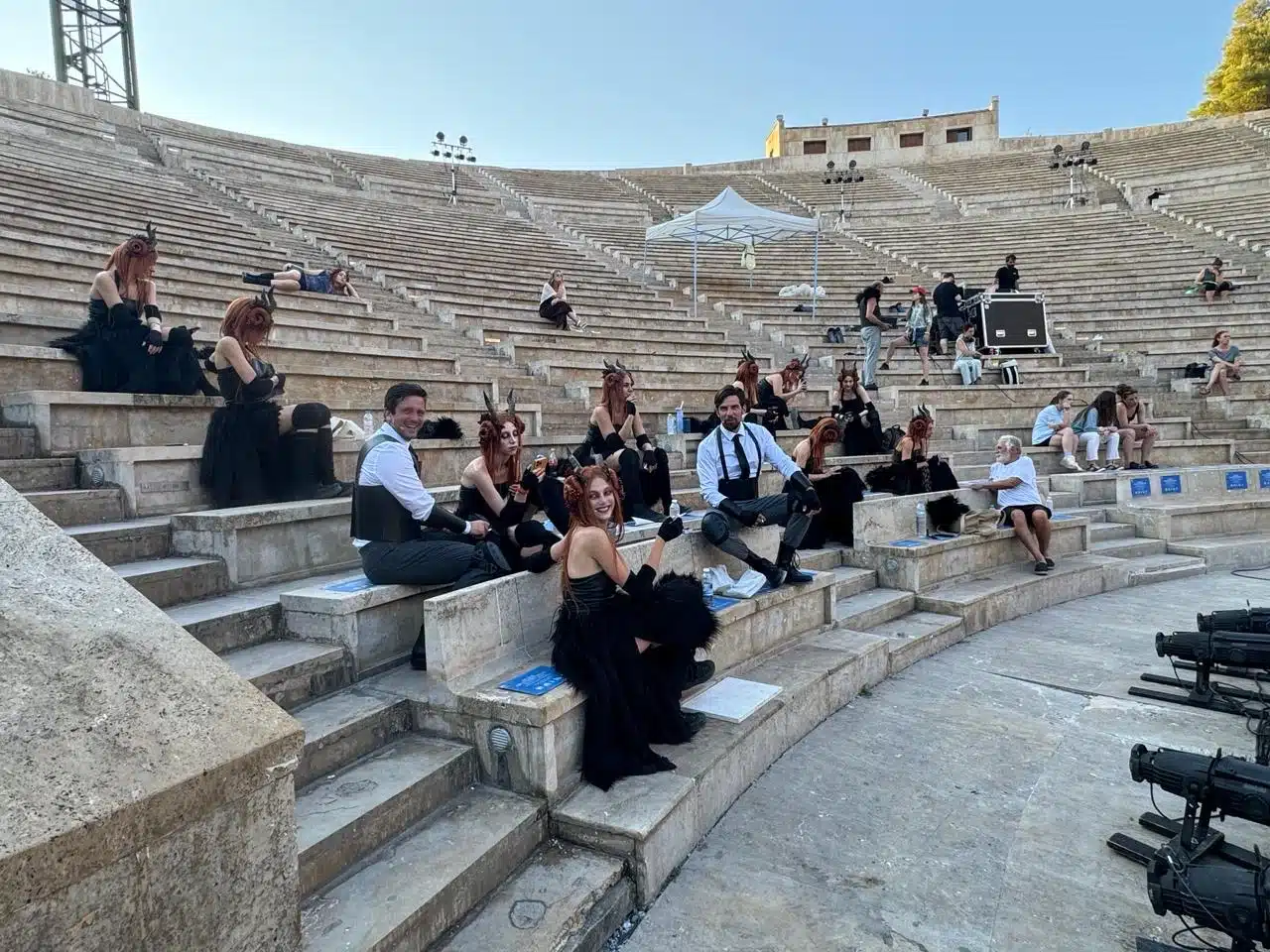
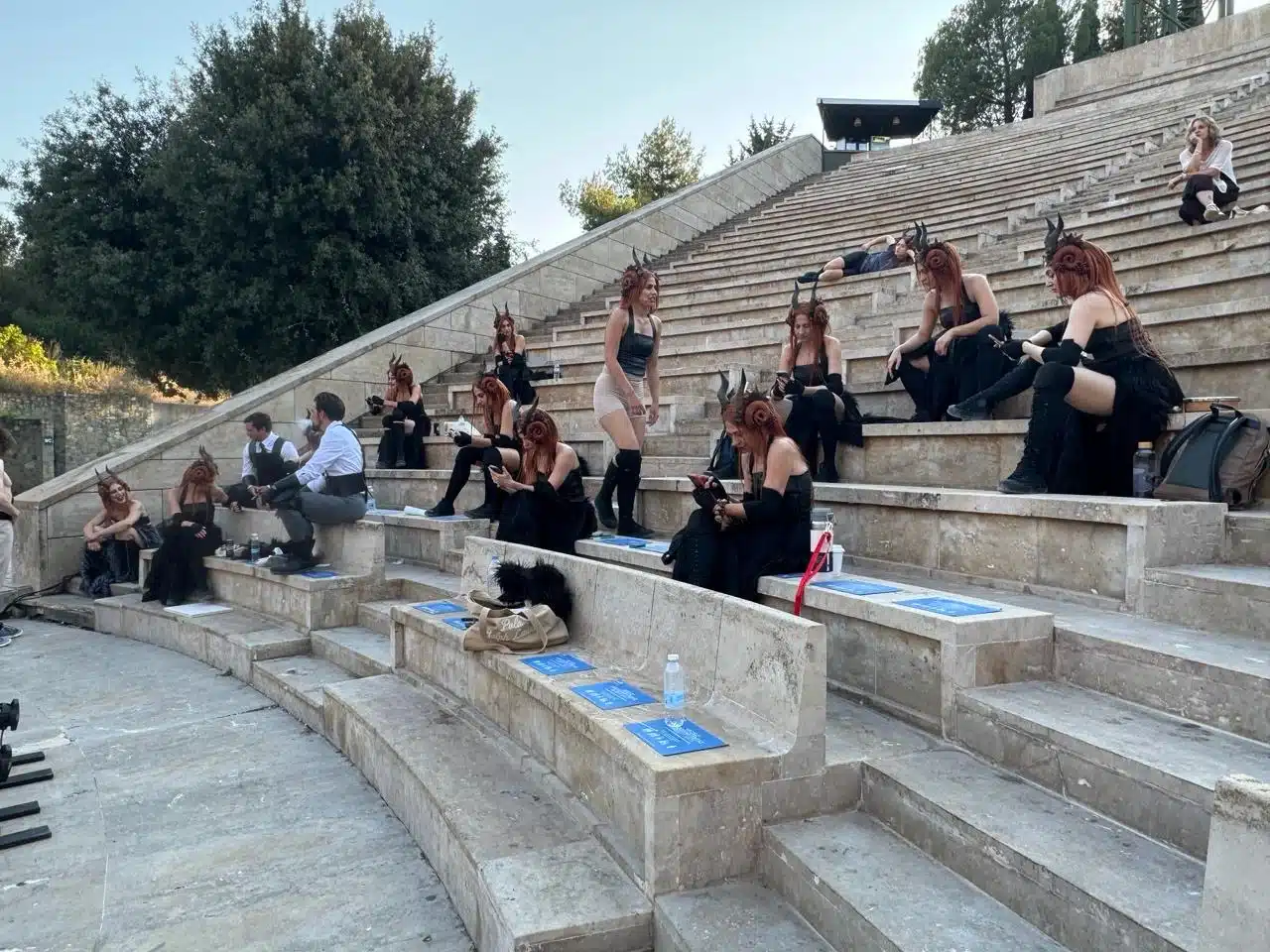
Photo credit: Javor Gardev